
Knee Surgery
Joints:
Joint is a structure that separates two or more adjacent elements of the skeletal system. Depending on the type of joint, such separated elements may or may not move on one another. This section discusses the joints of the human body.
Major weight bearing joints are Knee joints and Hip joints.
The Knee Joint:
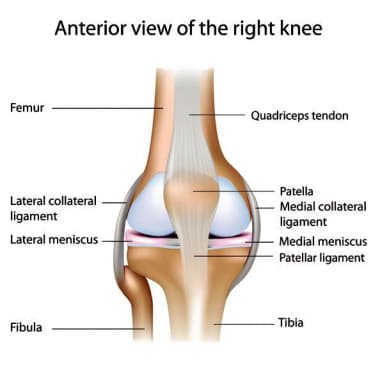
The knee is the largest and one of the strongest joints in the body. It is also delicate and complex. It joins the thigh with the leg and is made up of bones, ligaments, tendons, and cartilage. It consists of two joints: one between the femur and tibia and another between the femur and patella.
The knee is classified as a pivotal hinge joint, meaning it can straighten and bend in one direction while it allows some twisting to occur. This is known as flexion and extension; you will often hear your surgeons refer to this when discussing your knee.
Movements at the knee joint are essential to everyday life such as walking, climbing stairs, standing and sitting. Because it is such an integral part of normal activity, the knee is often susceptible to injuries and arthritis.
Arthritis:
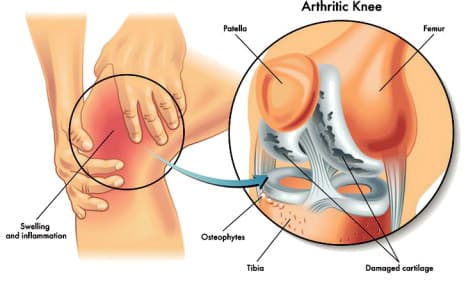
An individual faces normal wear and tear of the joints throughout their life. However, when this wear and tear is chronic it leads to joint damage which gives inconvenience to an individual while performing their routine activities. The joint damage depending upon the type and severity can be categorized as Arthritis.
Causes:
Arthritis is most commonly caused due to aging, “wear and tear,” injury, disease, and developmental abnormalities in the joint’s structure. There are over 100 different types of arthritis.
Types of Arthritis
Osteoarthritis, Post-Traumatic Arthritis, and Rheumatoid Arthritis are types of arthritis that frequently develop in the knee
- Osteoarthritis is the most common type of arthritis. It tends to develop as people grow older. Osteoarthritis can result from overuse of the main joints during sports or work. Osteoarthritis causes the articular cartilage covering the end of the bones to gradually wear away, resulting in painful bone on bone rubbing and disrupted movement.
- Rheumatoid Arthritis is the most common type of arthritis. It tends to develop as people grow older. Osteoarthritis can result from overuse of the main joints during sports or work. Osteoarthritis causes the articular cartilage covering the end of the bones to gradually wear away, resulting in painful bone on bone rubbing and disrupted movement.
- Post-Traumatic Arthritis can develop in individuals of all ages after a serious joint injury. A joint fracture or severely torn ligaments can damage the cartilage over time. This can cause joint pain and limit function.
.jpg&w=640&q=75)
Symptoms:
- You may feel moderate to severe pain while moving or resting.
- Your affected joint may feel swollen, stiff, or become unstable.
- Your legs may look like angulated inward or outward, instead of being straight.
- You may feel difficulty to move or bend your joints. Your joint pain may eventually limit everyday activities, including walking, stair climbing, and getting in and out of chairs.
- Your medications, rest, and physical therapy may provide little relief from the pain of severe arthritis.
Diagnosis:
- Physical examination: Medical history, symptoms, and level of pain, muscle strength, joint motion, and knee alignment. Blood tests and other laboratory tests
- Radiographic Evaluation: X-rays, Magnetic Resonance Imaging (MRI)
Treatment:
- Medication
- Rest
- Physiotherapy
- Joint Arthroplasty or replacement is recommended when non-surgical treatments do not provide relief of symptoms.
Surgery:
- Knee Arthroplasty involves removing damaged joint and replacing it with an artificial one. This is an inpatient procedure. You will most likely be admitted to the hospital on the day of arthroplasty and stay there for several days